
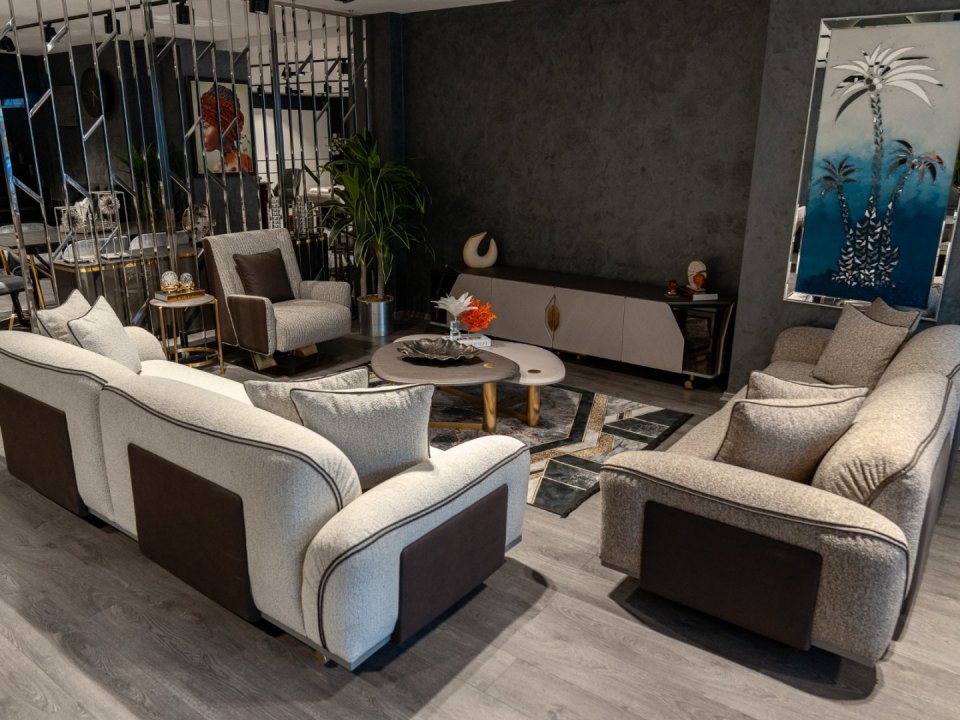
How should dimensions, layout, color, storage, and circulation areas be planned when choosing furniture for small living rooms? Explore practical tips for using the available space more efficiently.
Furniture Selection and Space-Saving Tips for Small Living Rooms
Furniture selection for small living rooms is not limited to choosing compact products; the key is to evaluate the room’s dimensions, circulation paths, natural light, and daily usage habits together. When the right sofa set, TV unit, coffee table, dining table, and storage solutions are selected, limited square footage can be used more efficiently. The goal in small living rooms is not to fill the space with as much furniture as possible, but to use the necessary pieces in the right dimensions and layout.
Planning furniture according to the architectural structure of the living room makes daily use easier and helps the space feel more organized. For this reason, before choosing furniture, it is important to take accurate room measurements and determine which areas will be used for seating, TV viewing, dining, or storage.
Why Should Furniture Selection Be More Careful in Small Living Rooms?
In a small living room, each piece of furniture occupies a larger percentage of the total usable space. For this reason, even a single incorrectly sized item can make circulation difficult.
For example, a sofa that is too deep, an oversized coffee table, or an unnecessarily wide TV unit can make the room feel smaller than it actually is.
For a successful small living room decoration, the following should be evaluated together:
-
Clear room dimensions
-
Door and window positions
-
Sofa dimensions
-
TV unit width
-
Coffee table size
-
Need for a dining area
-
Storage requirements
-
Circulation paths
-
Natural light
When these factors are planned before purchasing furniture, a more balanced layout can be created.
First Step: Take Accurate Living Room Measurements
Before making a furniture selection for a small living room, knowing only the wall lengths is not enough.
The following should also be included in the measurement plan:
-
Door width and opening direction
-
Window position
-
Balcony door
-
Radiator
-
Electrical outlets
-
TV connection points
-
Columns and wall projections
This allows you to calculate more accurately how the furniture will fit into the actual usable space.
Which Sofa Set Should Be Preferred in Small Living Rooms?
The sofa set is the furniture group that occupies the most space in a living room. For this reason, in small spaces, attention should be paid not only to seating capacity but also to the total external dimensions.
The following features can provide advantages in small living rooms:
-
Slim armrests
-
Controlled seat depth
-
Elevated leg design
-
Simpler backrest form
-
Designs without unnecessary modules
A sofa with slim armrests can provide more usable seating space within the same total width.
Can a Corner Sofa Be Used in a Small Living Room?
Yes, but corner sofa selection should be made carefully.
A corner sofa can use one part of a small living room efficiently; however, if it is too deep or too long, it can block circulation.
When choosing a corner sofa, check:
-
Which wall the long side will be placed against
-
Whether the short side blocks a door or balcony
-
TV viewing angle
-
Remaining space for the coffee table
A corner sofa is not the right choice for every small living room. In some layouts, a more compact combination of two- and three-seater sofas may be more functional.
Is Using Fewer Pieces Better Than Two Large Sofas?
For many small living rooms, yes.
Instead of using an unnecessary number of furniture pieces, choosing fewer items that meet the main needs can make the space easier to use.
For example:
-
One three-seater sofa + one armchair
-
A compact corner sofa
-
One two-seater sofa + two lightweight armchairs
can be considered depending on the room layout.
The important point is to choose according to the actual usage needs of the living room rather than following a standard furniture-set approach.
How Should a TV Unit Be Chosen for a Small Living Room?
A TV unit that is unnecessarily large can visually overwhelm the wall in a small living room.
For a more controlled layout, consider:
-
Dimensions suitable for the wall width
-
A body without unnecessary depth
-
Storage based on actual needs
-
Simple surfaces
The TV unit does not need to cover the entire wall. Leaving some space around it can help the furniture appear more balanced.
Does a Wall-Mounted TV Unit Save Space?
Wall-mounted or elevated TV units can help keep more of the floor visible.
This does not physically enlarge the living room, but it can reduce visual weight.
It can also make cleaning easier.
However, before choosing a wall-mounted system, the wall structure and suitability for installation should be checked.
How Should a Coffee Table Be Chosen for a Small Living Room?
Large and fixed coffee tables can cause unnecessary loss of space in small living rooms.
More flexible solutions may include:
-
Round coffee tables
-
Oval coffee tables
-
Nesting table sets
-
Modular coffee tables
-
Stackable tables
Round and oval forms can be easier to use in narrow circulation areas because they reduce sharp corners.
Leave Enough Space Between the Coffee Table and Sofa
If the coffee table is too close to the sofa, sitting down and standing up can become difficult. If it is too far away, it may lose its practical function.
For this reason, when choosing a coffee table, consider not only the dimensions of the product itself but also the clear circulation space that will remain around it.
In small living rooms, even a difference of a few centimeters can have an important effect on everyday use.
Are Light-Colored Furniture Pieces Advantageous in Small Living Rooms?
Light colors can create a visually lighter effect in small spaces.
Beige, cream, stone, light gray, and natural tones can be preferred especially for larger furniture surfaces.
However, furniture selection for small living rooms does not have to depend only on light colors.
Darker tones can also be used in a controlled way.
For example, light-colored sofas can be paired with a dark walnut TV unit or black metal details.
The important point is to avoid allowing dark colors to dominate all surfaces in the room.
How Should the Color Palette Be Limited?
Using too many main colors in a small living room can make the space appear more fragmented.
For a more balanced approach, you can define:
-
One main color
-
One secondary tone
-
One main wood color
-
One metal tone
This palette can then be repeated across the sofa, TV unit, coffee table, rug, and other complementary products.
How Should Wood Tones Be Used?
Using several different wood tones in a small living room can increase visual density.
For this reason, using the same or similar wood tones on the TV unit, coffee table, and dining table can create a more cohesive appearance.
A main tone such as walnut, oak, or natural wood can be selected and repeated subtly across other furniture pieces.
Why Are Slim-Legged Furniture Pieces Preferred in Small Spaces?
Furniture elevated from the floor allows more of the flooring to remain visible.
This effect can help the room feel visually lighter, especially with:
-
Sofas
-
TV units
-
Consoles
-
Coffee tables
However, leg design alone is not enough. The total volume and depth of the furniture should still be suitable for the room dimensions.
Are Multifunctional Furniture Pieces Useful in Small Living Rooms?
Yes, when there is a real need for them.
Multifunctional furniture can allow one piece to meet multiple needs.
For example:
-
Storage ottomans
-
Extendable dining tables
-
Nesting tables
-
TV units with drawers
can support more efficient use of space.
However, choosing furniture with unnecessary features simply because it is multifunctional is not always the right approach.
How Should Storage Be Planned?
Clutter can make a small living room appear even narrower.
For this reason, sufficient storage is important.
Closed storage areas can be considered when choosing a TV unit or console.
Using too many open shelves, on the other hand, may leave many small objects visible and increase visual density.
Balancing closed and open storage can create a more organized appearance.
How Can a Dining Area Be Added to a Small Living Room?
If the living and dining areas share the same space, table selection becomes especially important.
In small spaces, consider:
-
Round tables
-
Compact rectangular tables
-
Extendable dining tables
-
Slim-legged models
Chairs that can slide easily under the table can make better use of the available space.
Chairs with armrests or very wide bodies may occupy too much room in compact dining areas.
Who Is an Extendable Dining Table Suitable For?
Extendable tables can be functional for users who do not need a large dining table every day but occasionally host guests.
They occupy less space when closed and can increase seating capacity when necessary.
However, before purchasing, the dimensions of the table when fully extended and the total space it occupies together with the chairs should always be checked.
How Can Vertical Space Be Used?
In small living rooms, it is important to consider not only the floor but also the walls.
Wall shelves or a limited number of wall-mounted storage solutions can reduce the need for additional furniture on the floor.
However, filling every wall with shelves can make the room feel crowded.
Vertical storage should be used only where needed and in a controlled way.
Is It Right to Fill the Walls Completely with Furniture?
No.
Because furniture is already positioned closer together in small living rooms, leaving intentional empty areas on the walls can create visual breathing space.
Instead of placing the TV unit, artwork, shelves, and accessories densely on the same wall, simpler compositions can be preferred.
Empty wall surfaces are also part of the decoration.
How Should Mirrors Be Used in Small Living Rooms?
Mirrors can create a greater sense of space by reflecting light.
However, placement is important.
When positioned opposite or next to an area that receives natural light, a mirror can help distribute that light throughout the room.
Instead of using many small mirrors, a more controlled application that suits the overall design of the room can be preferred.
How Should Rug Size Be Determined?
It is often assumed that a small rug will make a small living room look larger, but a rug that is too small can make the seating group appear fragmented.
The rug should be large enough to visually connect the sofa group.
Allowing the front legs of the sofas to rest on the rug or using the rug to define the general boundaries of the seating area can create a more balanced result.
Does Curtain Selection Affect the Perception of Space?
Curtains are one of the largest textile surfaces in a living room.
In small living rooms, heavy and highly layered curtain arrangements can create visual density around the windows.
Simpler curtain arrangements can allow natural light to enter more freely.
When the curtain color is close to the wall tone, the transition between surfaces can appear calmer.
How Should Natural Light Be Used in Small Living Rooms?
Furniture layouts that block natural light should be avoided.
Positioning a tall console or large sofa in a way that blocks the entire window can make the room appear darker.
At the same time, placing the TV unit directly opposite a window may create screen reflections.
For this reason, the direction of the windows should be considered from the beginning of the furniture planning process.
How Should Lighting Be Planned?
In a small living room, layered lighting can be used instead of relying on a single, very strong light source.
For example:
-
Main ceiling light
-
Floor lamp
-
Small table lamp
-
Decorative wall light
can create different lighting scenarios.
Lighting can also help visually define different parts of the living room.
Why Is It Important to Keep Circulation Areas Open?
There should be a comfortable path from the door to the sofa, balcony, or dining area.
Furniture that blocks these routes can make a small living room feel more cramped.
In particular:
-
Coffee tables
-
Armchairs
-
Side tables
-
Dining chairs
should not narrow the main circulation route.
It is important to consider not only whether the furniture physically fits, but also how much space it occupies during use.
Should Furniture Be Placed Against the Walls in Small Living Rooms?
Not always.
If space is very limited, some furniture may need to be placed closer to the walls. However, pushing every piece against the walls can create an awkward empty area in the center of the room.
The direction of the seating group should be planned according to the TV unit and daily usage habits.
The right layout is not about pushing every piece of furniture as close to the wall as possible, but about creating the most efficient usable space.
One Large Accessory or Many Small Accessories?
Using too many small accessories in a small living room can increase visual clutter.
Instead, fewer objects in appropriate proportions can be preferred.
For example, one artwork, a few decorative objects, or controlled textile details may be enough.
Avoiding completely covering furniture surfaces with accessories can also create a more organized appearance.
Using Modern Furniture in Small Living Rooms
Modern furniture can offer suitable options for small living rooms because of its simple forms and functional approach.
Slim metal legs, flat surfaces, controlled colors, and compact dimensions can make the room easier to use.
However, the “modern” label alone does not mean that a product is suitable for a small space.
The actual dimensions of every product should always be checked.
Can Luxury Furniture Be Used in Small Living Rooms?
Yes.
Luxury furniture does not consist only of large and bulky products.
Furniture with compact dimensions, quality fabrics, and refined details can also be used in small living rooms.
In this case, the following should be kept under control:
-
Amount of metal and lacquer details
-
Sofa volume
-
Coffee table size
-
Color palette
One or two strong design details may be enough to establish the character of the room.
Test Furniture Dimensions on the Floor Before Purchasing
Marking the dimensions of the sofa, TV unit, or table you are considering with masking tape on the floor is a practical method.
This makes it easier to see:
-
The actual area occupied by the product
-
Circulation paths
-
Coffee table distance
-
Dining chair space
This method can be especially useful when choosing furniture online and may help reduce measurement mistakes.
Do Not Forget Delivery Measurements
It is just as important for the furniture to be transported into the home as it is for it to fit in the living room.
Especially for sofas and larger furniture pieces, check:
-
Building entrance
-
Staircase
-
Elevator
-
Corridor
-
Living room door
Modular products may be easier to transport, but the individual module dimensions should still be checked.
Explore Options Suitable for Your Small Living Room with Dumanlar Mobilya
When choosing furniture for a small living room, it is important to consider not only the design of the product but also its actual dimensions and how much space it will occupy together with the other furniture.
Dumanlar Mobilya’s sofa sets, corner sofas, TV units, coffee tables, dining room furniture, and complementary pieces in different design styles can be evaluated together according to different living room layouts.
When making a furniture selection for small living rooms, evaluating dimensions, usage habits, color, and storage needs together can help you use the living space more efficiently.
By exploring furniture alternatives and different collections suitable for your living room dimensions, you can evaluate options that match your everyday usage needs.