
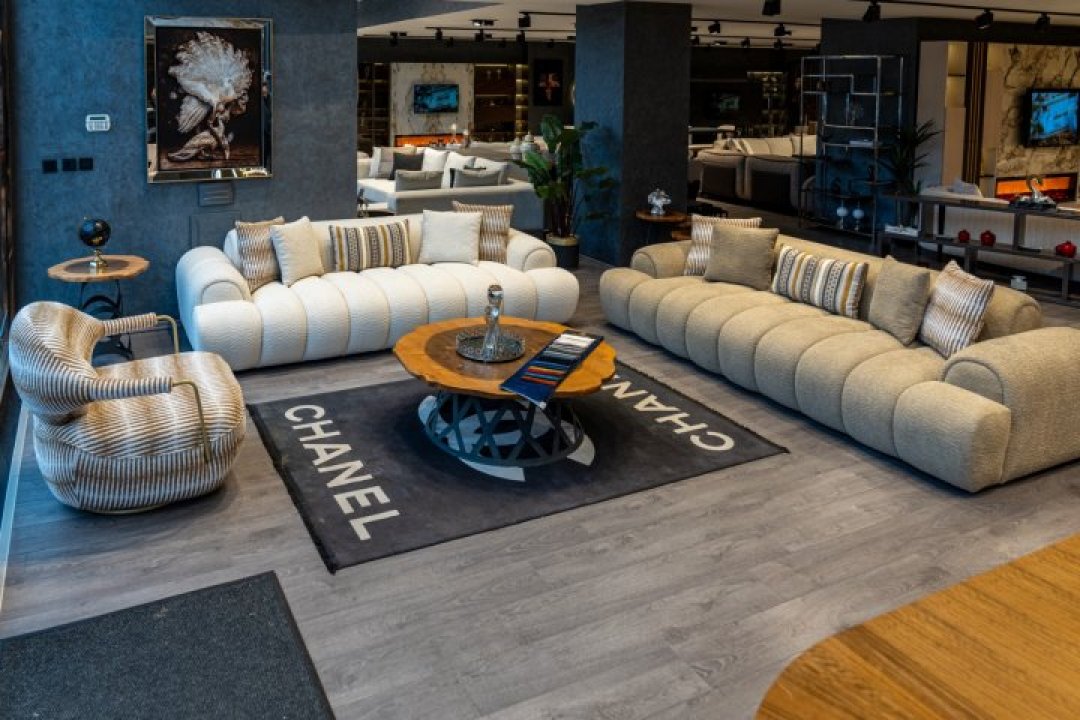
How should color, material, and texture harmony be achieved when choosing modern furniture? Learn what to consider when selecting fabrics, wood, metal, and surface finishes.
How Should Color, Material, and Texture Harmony Be Achieved When Choosing Modern Furniture?
When making a modern furniture selection, color, material, and texture should be evaluated as interconnected elements. Sofa fabrics, wooden surfaces, metal details, lacquer finishes, TV units, dining tables, and complementary furniture should all be considered within the same design language. The right combination helps the living space appear more balanced, highlights the design details of the furniture, and creates visual unity between different furniture groups.
The main goal in modern decoration is not to choose every piece of furniture in the same color. What matters is bringing different surfaces, tones, and materials together in a controlled way. Especially in living rooms, dining areas, and open-plan spaces, the relationship between furniture pieces directly affects the overall character of the interior.
Why Are Color, Material, and Texture Harmony Important in Modern Furniture?
The appearance of a piece of furniture is not determined by color alone. The same color can look completely different depending on the fabric or surface on which it is used.
For example, a beige sofa may create a calmer appearance with a matte, naturally textured fabric, while the same shade may look richer and more intense on a velvet-like surface. Similarly, walnut-toned wood may appear more natural with a matte finish, while creating a stronger contrast when combined with glossy lacquered surfaces.
For this reason, three main elements should be considered together when creating modern furniture decoration:
-
Color balance
-
Material harmony
-
Texture variety
When these three elements are coordinated successfully, the living space achieves a more controlled and cohesive appearance.
How Should a Color Palette Be Determined When Choosing Modern Furniture?
Color selection should begin by considering the entire living space rather than individual products.
The main color palette can be created by evaluating the wall color, flooring, natural light, existing furniture, and textile products.
A three-level color approach can generally be used in a modern living space:
Main Color
The main color is the tone that appears most prominently within the space. The sofa set, large surfaces, or walls may belong to this category.
Beige, stone, gray, brown, and natural tones are among the main colors frequently used in modern decoration.
Secondary Color
The secondary color supports the main tone and adds depth to the interior.
It can be used on the TV unit, dining table, chairs, or console.
Accent Color
The accent color is used in more limited areas. It can add visual movement through complementary pieces such as cushions, artwork, decorative objects, or an accent chair.
This method helps prevent the uncontrolled use of too many colors when creating furniture color harmony.
Is It Necessary to Use the Same Color in Modern Furniture?
No. When choosing modern furniture, not every piece needs to be the same color.
In fact, variations in tone can make the decoration look richer when used correctly.
For example, a light gray sofa set can be combined with:
-
A dark walnut TV unit,
-
Matte black metal details,
-
A cream-colored rug,
-
Charcoal or earth-toned accessories.
The main goal is not to match every color exactly, but to create a palette in which the tones support one another.
How Should Wood Tones Be Used Together?
Wood is one of the most commonly used materials in modern furniture. It may be used in varying amounts on dining tables, TV units, consoles, coffee tables, and furniture legs.
However, using too many different wood tones in the same living space can create visual clutter.
For a more balanced look, one main wood tone can be selected and repeated through smaller details on different pieces of furniture.
For example, the walnut tone used on a dining table can be repeated on:
-
The TV unit,
-
Coffee table legs,
-
The console surface.
This repetition creates a visual connection between different furniture pieces.
When evaluating wooden surfaces, not only the color but also the direction of the grain and the surface finish should be considered. Matte and naturally textured surfaces may create a simpler appearance in modern interiors, while lacquered or glossy finishes can create stronger contrasts.
How Can MDF, Lacquer, and Wooden Surfaces Be Balanced?
In modern furniture production, MDF, lacquer, natural wood, and veneer surfaces may be used across different furniture categories.
When combining these materials within the same living space, the character of each surface should be taken into consideration.
Matte MDF surfaces can create a balanced combination with highly textured fabrics. Lacquered surfaces, on the other hand, should be used more selectively. If too many glossy finishes are used in the same room, the visual intensity may increase.
The balance between matte and glossy surfaces should be planned carefully, especially in TV units, consoles, and dining room furniture.
What Should Be Considered When Choosing Fabric?
Sofa fabric forms one of the largest visual surfaces in living room decoration. Therefore, not only the color but also the relationship between texture, light, and other materials should be evaluated.
When choosing fabric, the following criteria can be considered:
-
Surface texture
-
Color tone
-
Appearance in daylight
-
Tactile feel
-
Relationship with the form of the furniture
-
Harmony with other textile products
If a highly textured fabric is used, simpler choices can be made for other textile surfaces such as rugs and curtains.
This helps preserve texture variety while preventing visual clutter.
How Is Texture Harmony Achieved?
Texture harmony does not mean that every surface should be identical. On the contrary, combining different textures in a controlled way can add depth to modern decoration.
For example:
-
Matte fabric
-
Natural wood
-
Glass surfaces
-
Metal details
-
Lacquer finishes
can all be used within the same living room.
However, each material should not be used with equal visual intensity.
One or two main surface characteristics can be selected, while the remaining materials can be used as supporting elements.
This approach creates a more balanced result, especially when designing a modern living room.
How Should Metal Details Be Used in Modern Furniture?
Metal details can be used on sofa legs, table frames, TV units, coffee tables, and decorative furniture.
In modern furniture, metal surfaces are generally used to add contrast and definition to the design.
Black, anthracite, bronze, or metallic tones may be preferred. However, rather than using many different metal finishes in the same living area, selecting one main metal tone creates a more controlled appearance.
For example, if black metal is used on sofa legs, repeating a similar tone on the coffee table or dining table can strengthen the overall visual consistency.
How Should a Modern Sofa Set and TV Unit Match?
A modern sofa set and TV unit are two of the main furniture groups in a living room.
If soft and simple forms are used in the sofas, choosing a TV unit with overly decorative details may create visual inconsistency.
Likewise, if the sofas feature geometric and clearly defined lines, simpler and more linear TV units can be preferred.
The following details can help create harmony:
-
The same or similar wood tone
-
Similar metal details
-
Shared geometric lines
-
Repeated colors
-
A balanced use of matte and glossy surfaces
This method can also help furniture selected from different collections appear more coordinated.
How Can Harmony Be Created Between Dining Room and Living Room Furniture?
In homes where the living and dining areas share the same space, dining room furniture should not be considered separately from the seating area.
A common visual language can be created between the dining table, chairs, console, and sofas.
This connection may be established through one or more of the following elements:
-
Wood tone
-
Leg design
-
Metal color
-
Fabric tone
-
Surface texture
-
Furniture form
For example, the wood tone used on the dining table can be repeated on the surface of the TV unit. The fabric color of the dining chairs can also be coordinated with the secondary tones used in the sofa set.
How Should Colors and Materials Be Used in Small Spaces?
In small living areas, it is important to limit visual density when choosing colors and materials.
Using too many different materials, patterns, and colors may make the space appear more cluttered.
The following approaches can be used in small living rooms:
-
Limit the number of main colors
-
Use calmer tones on larger pieces of furniture
-
Repeat wood and metal details in a controlled way
-
Avoid overly intense patterns
-
Use visually lightweight surfaces such as glass as supporting elements
These methods can help furniture appear more organized and visually connected.
How Should Material Variety Be Used in Large Living Rooms?
Different surfaces and materials can be used more freely in larger living rooms. However, having more space does not mean that unlimited variety should be introduced.
In spacious interiors, seating and dining areas can be separated through different material details. At the same time, visual continuity can be maintained by repeating common colors or wood tones across both areas.
For example, the seating area may feature a design dominated by wood and fabric, while the dining section can use the same wood tone together with metal details.
How Can Rug and Curtain Textures Be Coordinated?
Rugs and curtains should be selected after the colors and textures of the furniture have been established.
For sofas with strong textures or distinctive fabrics, simpler rugs may be preferred.
If the furniture has more minimal surfaces, controlled patterns or textures can be introduced through the rug.
When choosing curtains, the fabric’s light transmission, color, and surface character should also be considered.
The goal is not to use exactly the same texture as the furniture, but to create a textile balance that complements the overall decoration.
How Does Lighting Affect Colors and Materials?
Lighting directly affects how the colors and surface characteristics of furniture are perceived.
Wood, metal, fabric, and lacquer finishes may appear different under different color temperatures.
For this reason, a fabric or wood tone that looks appealing in a showroom may appear different at home.
Whenever possible, evaluating color and material samples under natural light can be useful when selecting furniture.
Ceiling lighting, floor lamps, and decorative lighting can also be used together in the living room to ensure that different surfaces are perceived in a more balanced way.
Daily Habits Should Also Be Considered When Choosing Modern Furniture
Color and texture selection is not only an aesthetic decision. Daily use directly influences material choices as well.
In frequently used living rooms, the intensity of use should be considered when selecting fabrics. For dining tables, ease of surface maintenance can be important, while TV units should be evaluated according to storage and functional requirements.
In homes with children or in heavily used living spaces, surfaces that are easier to clean may be preferred.
For this reason, modern furniture selection should be based not only on appearance but also on the way the space will be used.