
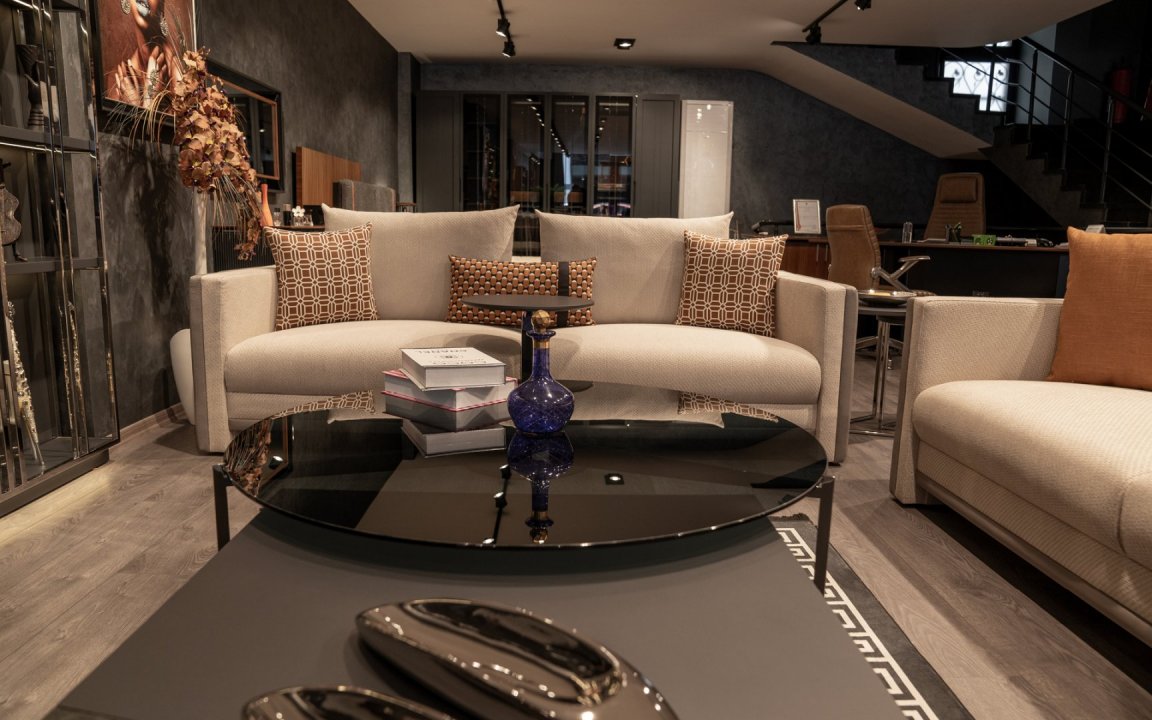
How should fabric, color, and seating structure be determined when choosing a sofa set? Explore what to consider in terms of usage habits, living room size, texture, and ergonomics.
How Should Fabric, Color, and Seating Structure Be Chosen When Selecting a Sofa Set?
When choosing a sofa set, fabric, color, and seating structure should be evaluated together. The fabric should be suitable for the intensity of use, the color should appear balanced with the lighting and other furniture in the living room, and the seating structure should support everyday usage habits. For users furnishing a new living room, replacing existing sofas, or creating a more functional seating area, the right sofa should be selected not only according to design but also according to comfort, dimensions, materials, and intended use.
A sofa set is one of the largest and most frequently used furniture groups in a living room. Therefore, choosing the wrong fabric may cause maintenance difficulties, an unsuitable color choice may disrupt the overall balance of the room, and an inappropriate seating structure may create discomfort in daily use. Evaluating these three elements together helps support a more suitable and long-term choice.
What Should Be Determined First When Choosing a Sofa Set?
The first step in making the right sofa set selection is identifying usage habits.
How often the living room is used, how many people live in the home, how frequently guests are hosted, television viewing habits, and the size of the space directly influence the selection process.
For example, in a living room that is used intensively every day, fabric durability and ease of cleaning may be a priority. In a living room mainly used for hosting guests, seating capacity and the overall form of the furniture may become more important.
It can be helpful to answer the following questions during the selection process:
-
Will the sofa be used intensively every day?
-
Are there children or pets in the home?
-
Is a more upright or more relaxed seating position preferred?
-
Is the living room small or spacious?
-
Is there a dining area next to the sofa set?
-
Is easy fabric cleaning important?
These answers help make subsequent decisions about fabric, color, and seating structure more suitable.
What Should Be Considered When Choosing Sofa Fabric?
Sofa fabric is one of the key elements that determines both the appearance and performance of the furniture.
When selecting fabric, it is not enough to consider only color and texture. The fabric should also be suitable for the intensity of daily use.
The main criteria to evaluate include:
-
Weave density
-
Surface texture
-
Ease of cleaning
-
Appearance under light
-
Tactile feel
-
Suitability for usage intensity
-
Relationship with the furniture form
For heavily used sofas, fabrics that are easier to maintain and capable of preserving their structure may be preferred. In areas intended for more decorative use, texture and surface character may become more important.
How Does Fabric Texture Affect the Appearance of a Sofa?
The same color can appear different on different types of fabric.
A matte and naturally textured fabric may create a calmer appearance, while velvet-like or more reflective surfaces may make the color appear richer and more intense.
For this reason, when making a fabric selection, it can be useful to evaluate the sample not only in a catalog but also, whenever possible, under both natural and artificial light.
The form of the sofa is also important when selecting texture. On models with soft lines and large surfaces, pronounced textures may become more visible. On sharper and more geometric designs, smoother or finer-textured fabrics can make the furniture form appear clearer.
How Should Sofa Color Be Selected?
Sofa color selection should be considered together with the overall color palette of the living room.
Wall color, flooring, curtains, rugs, TV units, and dining room furniture are among the main elements that influence sofa color.
Because the sofa is one of the largest surfaces in the living room, the selected color directly affects the overall atmosphere of the interior.
Lighter tones may create a calmer appearance, while darker tones can add stronger visual weight to the space.
The following elements should be considered when choosing a color:
-
The amount of daylight in the living room
-
Wall color
-
Flooring tone
-
Color of wooden furniture
-
Curtain and rug selection
-
Size of the living room
Which Living Rooms Are Suitable for Light-Colored Sofas?
Beige, stone, cream, light gray, and natural tones are frequently preferred in modern living rooms.
These colors may create a lighter visual effect, especially in small or medium-sized rooms.
However, when choosing a light-colored sofa, the maintenance and cleaning characteristics of the fabric should also be evaluated.
In heavily used living spaces, the choice should not be made based on appearance alone. Daily usage conditions should also be considered.
How Should Dark-Colored Sofas Be Used?
Anthracite, dark gray, brown, and other deep tones can create a more pronounced focal point in the living room.
Dark-colored sofas can have a strong design impact in spacious rooms. However, when used extensively in small rooms with limited light, they may make the space appear more enclosed.
For this reason, darker tones can be balanced with light-colored walls, natural wood surfaces, or lighter textile products.
Should a Sofa Set Use One Color or Different Colors?
The entire sofa set does not have to be the same color.
Three-seater sofas may be selected in a more neutral tone, while an armchair or accent chair can use a secondary color.
This approach can add visual movement to the decoration.
However, using a limited palette generally creates a more balanced result than introducing too many different colors.
For example:
-
Stone tones on the main sofas
-
Warm brown on an accent chair
-
Darker accent tones on cushions
can be used.
In these combinations, the colors should also relate to the other furniture in the living room.
What Is Seating Structure?
Seating structure refers to the structural characteristics that determine how the sofa supports the body when seated.
Cushion firmness, seat depth, backrest angle, backrest height, and armrest height are all part of this structure.
Seating structure is not only related to personal comfort. It should also be selected according to the intended use of the sofa.
More upright seating may be suitable for conversation, hosting guests, and shorter periods of use. Deeper and softer seating may be preferred for watching television or relaxing for longer periods.
How Should Seat Depth Be Determined?
Seat depth refers to the distance between the front edge of the sofa and the backrest.
Deeper seating can provide a more relaxed and spread-out sitting position. However, overly deep seating may not be ergonomic for shorter users.
Shallower seating may be more suitable for users who prefer a more upright sitting position.
Therefore, during the sofa set selection process, attention should be paid not only to the overall appearance of the sofa but also to the body position when seated.
Sitting on the sofa for a few minutes in the showroom can help evaluate not only the initial feeling but also back and leg support.
How Should Cushion Firmness Be Chosen?
A very firm or very soft cushion does not provide the same result for every user.
Firmer seating may preserve its form more clearly and support a more upright sitting position. Softer seating may create a more relaxation-focused feel.
The important point is to choose a firmness level that matches the user’s habits.
Foam density, support materials, and the layered structure used inside the cushion can also affect the seating experience.
For this reason, when evaluating a product, it is important to consider not only whether it is described as “firm” or “soft,” but also its technical structure and intended use.
Why Are Backrest Height and Backrest Angle Important?
The backrest plays an important role in seating ergonomics.
Low-back sofas may create a more horizontal and modern appearance, while high-back models may provide greater back support.
The angle of the backrest also affects sitting posture.
A more upright angle may be suitable for active sitting, while a more reclined backrest may be better suited to relaxation.
For this reason, backrest design should be evaluated from both aesthetic and ergonomic perspectives.
How Does Armrest Design Affect Use?
Armrests significantly affect the total width of a sofa.
A sofa with wide armrests may have a strong visual presence, but it can occupy unnecessary space in smaller living rooms.
Thinner armrests can provide more seating space within the same total width.
Armrest height is also important for usability. Very high armrests may feel uncomfortable for some users, while very low armrests may not provide sufficient support.
How Does Living Room Size Affect Sofa Selection?
The dimensions of the sofa set should be proportionate to the size of the living room.
In small living rooms, very deep and wide sofas may reduce circulation space.
In large living rooms, smaller-scale sofas may appear visually insufficient.
Before purchasing a sofa, the following dimensions should be checked:
-
Total width
-
Seat depth
-
Sofa height
-
Armrest width
-
Leg height
-
Circulation distance between sofas
These dimensions should be evaluated on the living room plan.
How Should a Sofa Set Be Chosen for Small Living Rooms?
In small living rooms, compact dimensions and appropriate seating capacity become more important.
Thinner armrests, balanced seat depth, and raised leg structures can make the space feel visually lighter.
Instead of selecting a set made up of too many pieces, choosing only the number of furniture pieces needed can be more functional.
For example, instead of two large sofas and two armchairs, a three-seater, a two-seater, and, when necessary, a single complementary chair may be preferred.
How Should Sofa Placement Be Planned in Large Living Rooms?
Larger seating groups can be used in spacious living rooms.
However, a larger room does not always require more furniture.
Sofas can be positioned facing one another to create a conversation area. In large rooms, it is also possible to create a main seating group along with a separate reading or relaxation zone.
The TV unit, dining area, and main circulation paths should all be considered when planning the layout.
How Should Fabric Be Selected in Homes with Children?
In homes with children, ease of maintenance may become a priority when choosing fabric.
Fabrics that are easy to clean, suitable for daily use, and able to maintain their structure under frequent contact can be considered.
More delicate surfaces may require additional maintenance under intensive use.
For this reason, fabric selection should not be based solely on color or texture preference.
What Should Be Considered in Homes with Pets?
In homes with pets, the fabric surface should be suitable for daily conditions such as claws and pet hair.
Loosely woven fabrics may be more sensitive in certain usage situations.
Tighter woven fabrics that offer easier maintenance may be preferred.
The effect of fabric color on the visibility of pet hair can also be considered for everyday use.
How Should Sofa Fabric Be Coordinated with Rugs and Curtains?
Because sofas, rugs, and curtains are all textile elements, they should be evaluated together.
With highly textured or patterned sofas, choosing simpler rugs and curtains may create visual balance.
If the sofa is simpler, stronger texture can be introduced through the rug or curtains.
The goal is not to make every surface identical, but to create a controlled relationship between different textile products.
How Should Sofa Color Be Matched with Wooden Furniture?
The wood tones used on the TV unit, coffee table, and dining table influence the sofa color.
Warm wood tones can be coordinated with beige, brown, stone, and natural-colored fabrics.
Darker wood surfaces can create contrast with lighter-colored sofas.
Establishing a balanced relationship between sofa color and wood tones can strengthen the visual unity of the entire living room.
How Does Lighting Change Sofa Color?
Fabric color may not look the same in a showroom and at home.
The amount of natural light and the color temperature of artificial lighting can affect how the fabric is perceived.
For this reason, it can be useful to evaluate fabric samples under different lighting conditions whenever possible.
This is especially important with intermediate tones such as gray, beige, and stone, where lighting can make the color appear warmer or cooler.